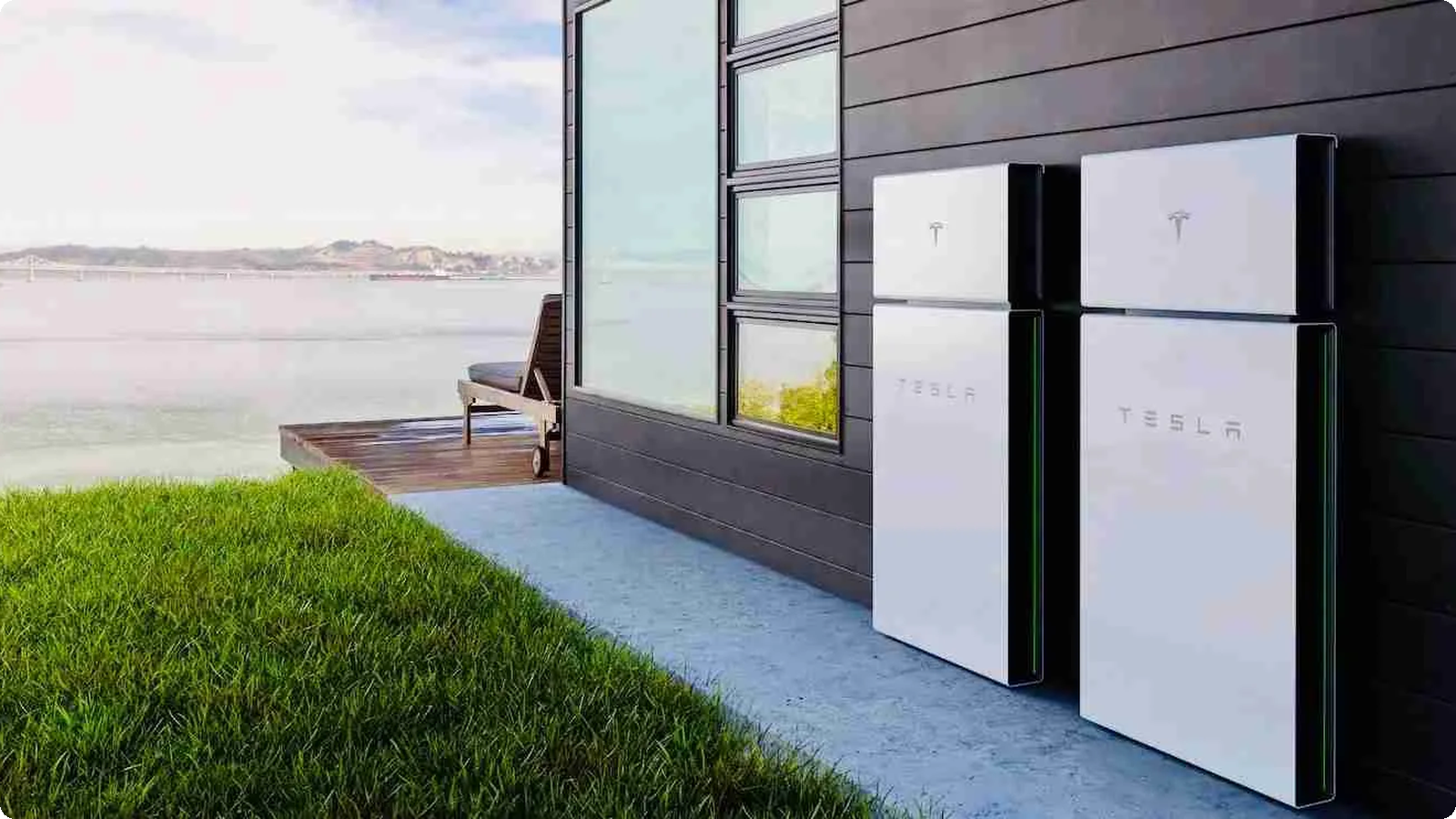
Most home batteries need a separate solar inverter and a separate backup switch. Powerwall 3 has the inverter built in, which is why a new solar and battery system needs less kit on the wall, loses less energy between components and comes with one warranty.
Powerwall 3 takes DC straight from the panels through three MPPT trackers rated at up to 20 kW, so on a new solar system there is no separate inverter to buy, mount or replace in year twelve. On an existing system it is AC coupled instead, and the old inverter stays.
A single unit gives 11.04 kW continuously and can start motor loads rated up to 185 A locked rotor. In plain terms a heat pump compressor, an oven and a shower can all run from the battery at once, which smaller batteries cannot do.
Each Powerwall 3 takes up to three expansion units of 13.5 kWh, so one inverter can carry 54 kWh. Most houses need one unit; the point is that a second can be added later as a short visit, not a redesign.
The battery and electronics are rated IP67 and Tesla states the unit withstands extreme weather, cold, high humidity and up to 0.6 metres of water. On our Aberystwyth job both units sit on the outside wall of the house.
With Tesla’s Backup Gateway 2 between the meter and the house, a power cut is invisible: the house switches to the battery and the solar keeps charging it. Storm Watch tops the battery up when the Met Office issues an amber or red warning.
The Tesla app learns the house, works with time of use tariffs so the battery fills on cheap overnight electricity when the roof cannot, and shows you where every kilowatt hour went. It is the part owners talk about most.
One minute inside the factory, from cell to finished unit. Worth watching for the scale of it: the same cells, electronics and testing that go into Tesla’s grid scale storage, packaged for a house wall.
Ten years, unlimited cycles for solar self consumption and backup, and at least 70% of the original capacity guaranteed at the end of it, with the built in inverter covered under the same warranty. Read our deep dive on Powerwall 3.
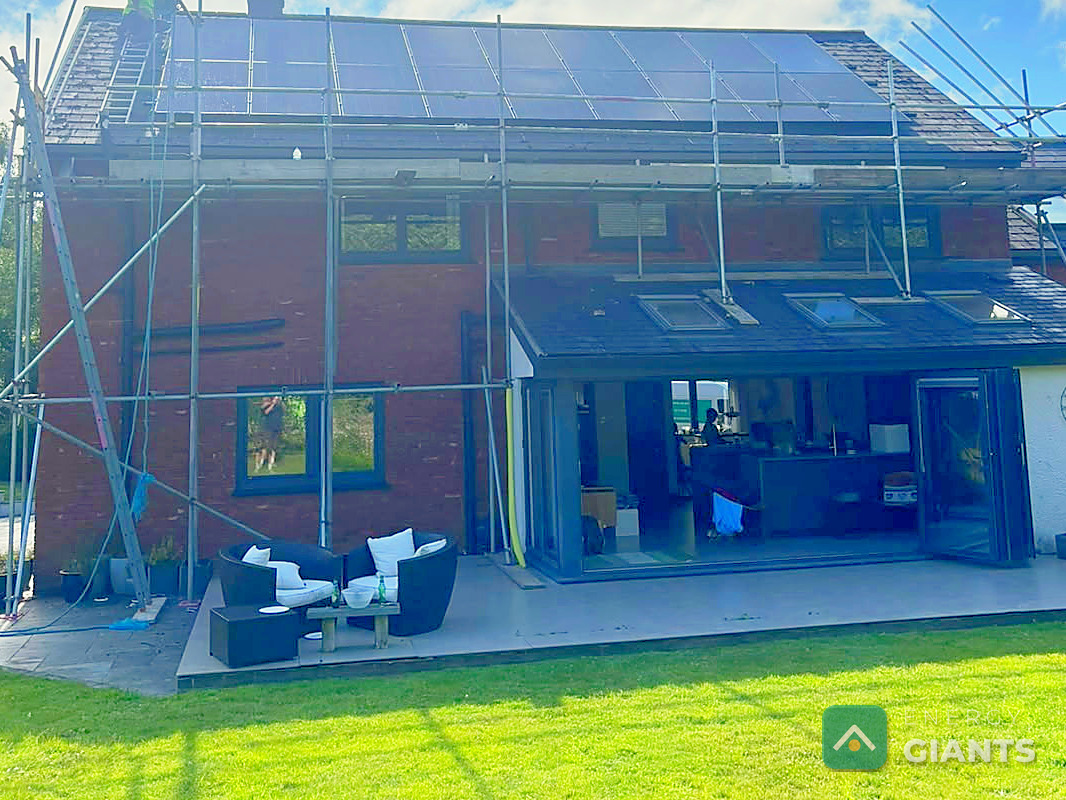
Eighteen Aiko panels, 9.72 kWp, feeding two Tesla Powerwall 3 units on the outside wall, 27 kWh in all. The network would only allow 4 kW of export, so the design keeps the energy in the house instead: self sufficiency modelled from 34% to 64%, a projected first year benefit of £1,682 and payback in under nine years, with the assumptions shown.
We say so at the survey. These are the three situations where Powerwall 3 earns its place.
The house is about to use two or three times the electricity it does now, much of it in the evening. Powerwall 3’s output and expansion room mean it will still be the right size in five years, not just this one.
Rural Ribble Valley and Bowland supplies drop out more than town ones. With the Backup Gateway the freezer, the boiler controls, the broadband and the lights carry on, and the roof keeps the battery charged through a long outage.
Powerwall 3 AC couples to an existing solar system without touching the old inverter, which is exactly how the Aberystwyth job was certified. If the old inverter is near the end of its life we will tell you whether replacing it makes more sense.
The same people survey, design, fit and commission. Nothing is passed to a subcontractor you have never met.
A visit, not a satellite image. We look at the roof, the consumer unit, the supply, where the unit will sit and how the house actually uses electricity, from your bills or your smart meter data.
A sized design with the assumptions written down, and the network application to Electricity North West or your operator handled by us. Export limits are designed around, as at Aberystwyth.
Typically a day for a battery, two with solar. The unit is wall or floor mounted, inside or out, with the Gateway fitted if you have chosen backup.
MCS certificate for the battery and, where fitted, the solar, the app set up on your phone and a walk through of what it is doing and why. Then a call a month later to check the numbers.
Powerwall 3 sits at the top of the home battery market and we will not pretend otherwise. What decides whether it pays is how much of your electricity it moves from the grid to your own roof, so we quote after we have seen the house and your usage, with the payback worked out alongside the price.
Batteries, panels and the installation are zero rated until 31 March 2027. It comes straight off the quote with no grant application.
Every quote carries a first year benefit and a payback period with the assumptions stated, the way the Aberystwyth case study does. If a smaller battery would pay back faster, we say so.
For a sense of scale before a survey, the ranges by house type and where the figures come from are on what solar costs in Lancashire.
If you would like to spread the cost, our finance partner Neo Loans, an FCA authorised credit broker, can talk you through the options. We do not arrange finance ourselves.
Energy Giants introduces customers to Neo Loans. We are not authorised or regulated by the Financial Conduct Authority, we do not give financial advice, and we do not arrange, recommend or promote any particular loan. Any agreement is between you and the lender, on the lender’s terms, and it does not change our quote. Finance is subject to status and affordability. You must be 18 or over and a UK resident. No commission or fee is paid or received by Energy Giants for the introduction.
Neo Loans Limited is Authorised and Regulated by the Financial Conduct Authority, Firm Reference No. 673521. We are a credit broker, not a lender. Neo Loans Limited, registered in England and Wales under company registration No. 08587808. Registered Office, Devon House, 1 Chorley New Road, Bolton, BL1 4QR.
Think carefully before securing other debts against your home. Your home may be repossessed if you do not keep up repayments on a mortgage or any debt secured on it. Missing repayments could affect your credit rating.
Sometimes. Charged overnight on a cheap off peak tariff and run through the expensive hours it can still cut a bill substantially, and it qualifies for 0% VAT. But it earns most when a roof is filling it for free during the day, so we will model both and show you the difference.
Yes. Powerwall 3 AC couples to an existing solar system and the old inverter stays in place. Our Aberystwyth installation was certified that way. If the inverter is old we will tell you whether a DC coupled replacement makes more sense.
Only with Tesla’s Backup Gateway 2 fitted between the meter and the house. Without it, like every grid tied battery, it shuts down in an outage for safety. With it the switchover is instant and the solar keeps charging the battery while the grid is off.
One unit covers most houses, including ones with a heat pump. Two, or an expansion pack, make sense for large households, all electric homes or long outages. We size from your actual usage, and a battery bigger than your evenings is money that never pays back.
Inside or out. It is IP67 rated, so an outside wall, a garage or a utility room all work. It is 1,105 by 609 by 193 mm and about 130 kg, so it needs a solid wall or a floor stand and a short cable run to the consumer unit.
Yes. The Tesla app supports time of use tariffs, so the battery charges overnight when electricity is cheapest and holds it for the peak. We set this up at commissioning and check it is doing what it should a month later.
We are MCS certified for solar PV and battery storage, and every Powerwall 3 we fit is designed, installed and commissioned by our own team under those certifications, with an MCS certificate issued for the installation. We do not use subcontractors for this work.
Ten years from Tesla, with unlimited cycles for solar self consumption and backup use and at least 70% of the original capacity guaranteed at the end. The built in inverter is covered under the same warranty. Our workmanship is backed separately by an insurance backed guarantee.
Book a free survey and we will size a battery against your real usage, with the figures on the quote, and tell you honestly if it is not worth it.
Size it against your evenings, not your roof. The ten minute method.
The three retrofit routes, and the six things that decide which applies.
Every rate above 15p has one thing in common: a battery.
Notes. 1. Self sufficiency figures are from the MCS performance estimate for the Somerset Avenue installation, 25.5% without storage and 78.0% with 10.36 kWh of usable battery capacity, on an assumed 3,500 kWh a year of use; estimates, not a guarantee. 2. Home battery storage is zero rated for VAT in Great Britain, including batteries installed on their own, under the energy saving materials relief. 3. Export rates as published by Which? in April 2026 and summarised in our tariff article; rates change and conditions apply, check current terms with the supplier.