

Case study · Tesla Powerwall 3 · Near Aberystwyth, Ceredigion
Two Tesla Powerwalls, one east facing roof,
and a grid connection capped at 4 kW.
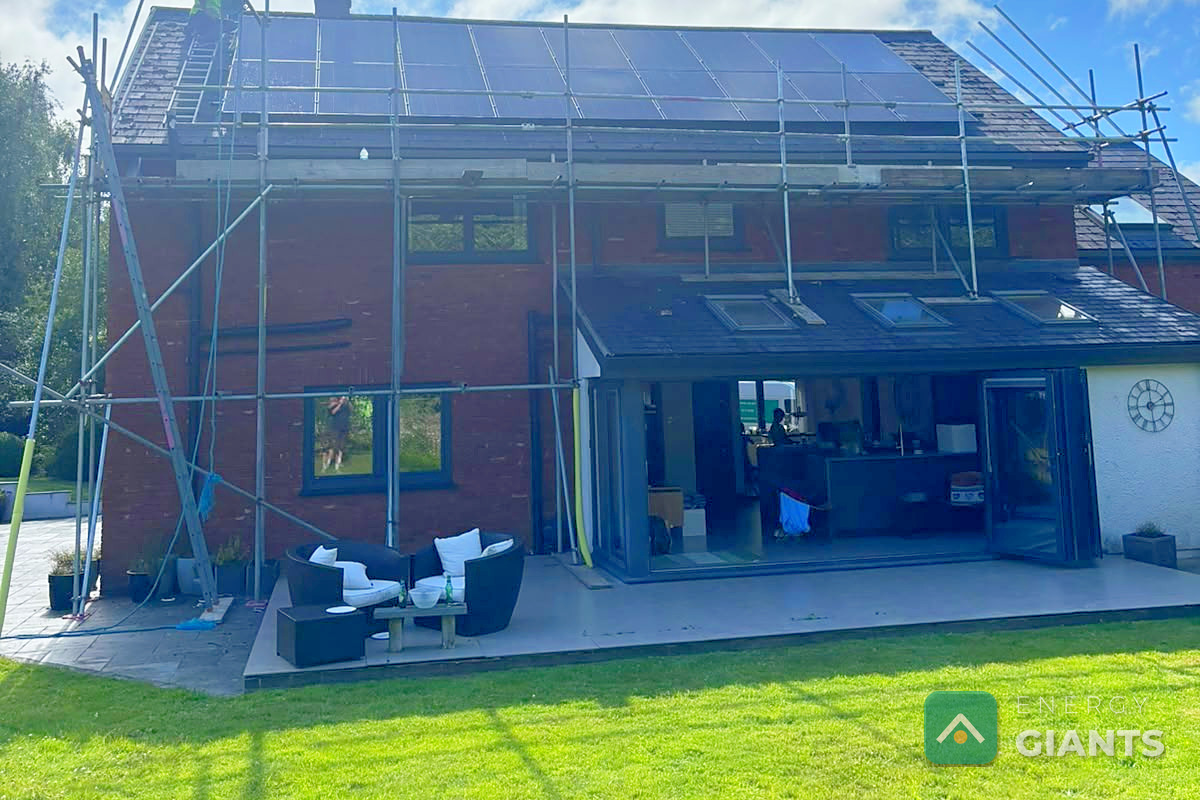
A detached house in the hills above Aberystwyth with a large electricity bill, a roof that faces east rather than south, and a network operator that would only accept 4 kW of export. The answer was eighteen Aiko panels and a Tesla Powerwall 3 with an expansion unit, 27 kWh of storage on the outside wall of the house, so that almost nothing the roof makes is thrown away. Installed and commissioned in July 2026.

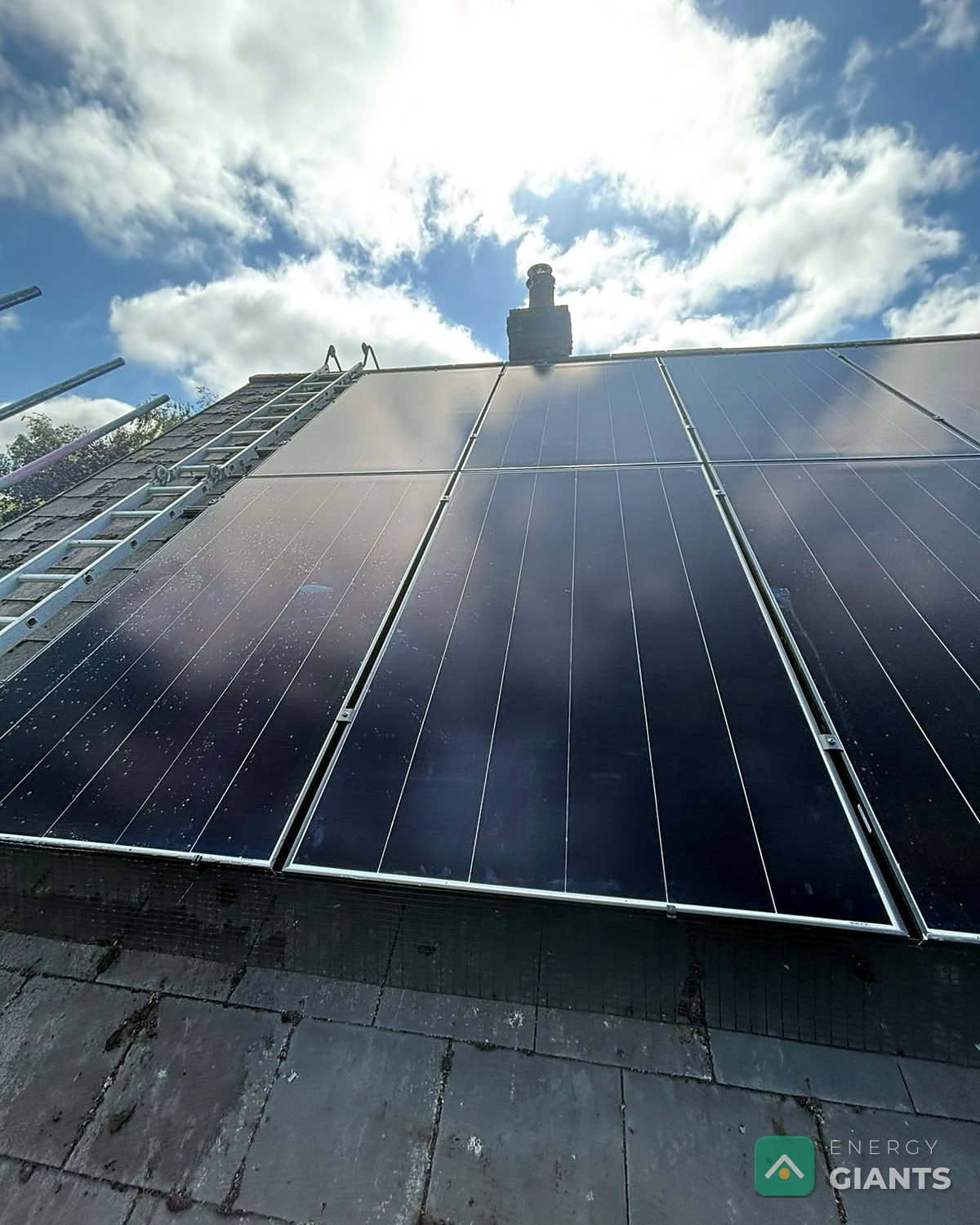
 Aiko panels and a Tesla Powerwall 3 with expansion unit, designed, installed and commissioned by Energy Giants.
The numbers from the design
9.72kWp
Eighteen Aiko panels
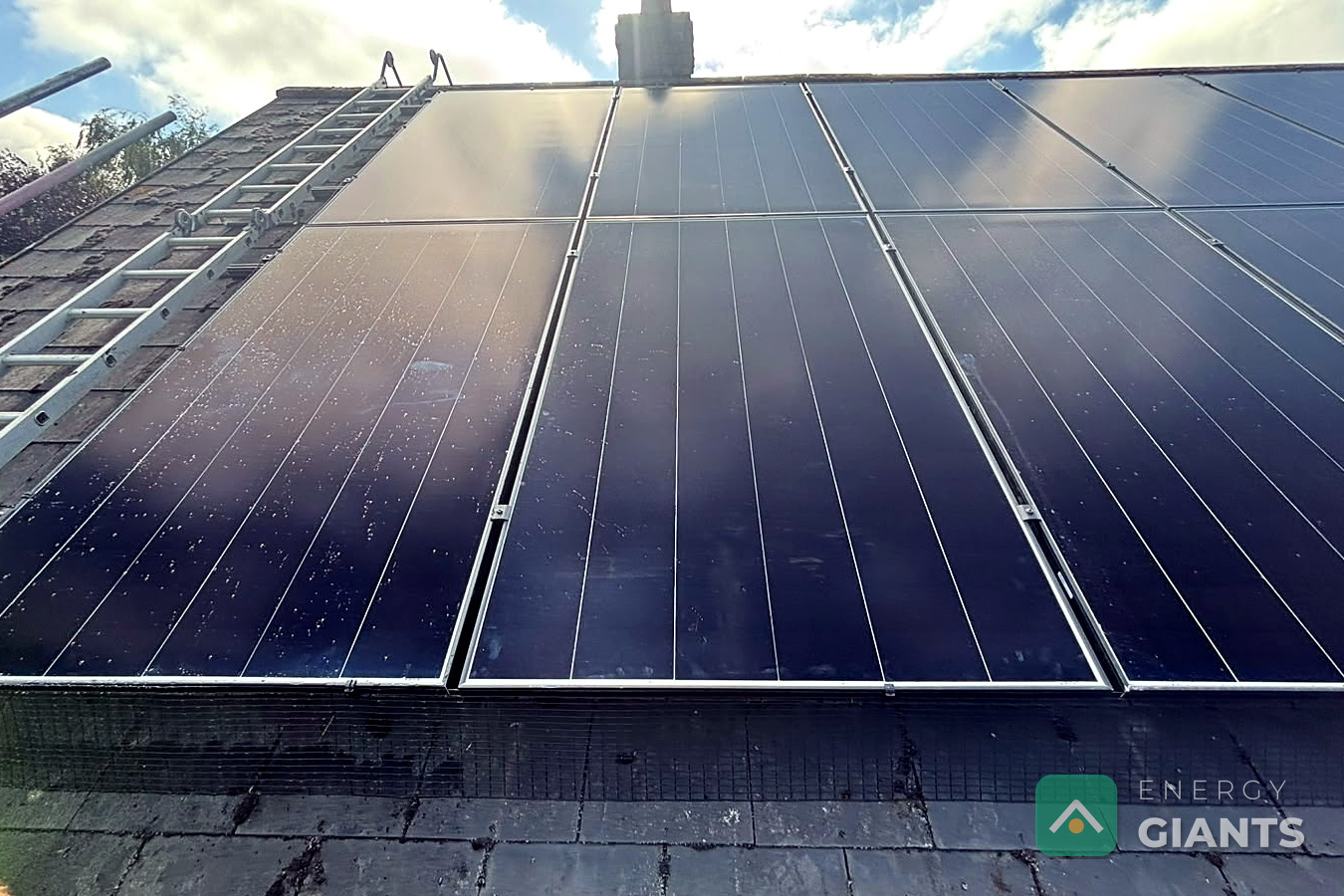
540 W each on a single plane at 30 degrees, facing 105 degrees from south. An east roof, not a south one, and still a big array.1
27kWh
Tesla Powerwall 3, plus expansion
Two units on the outside wall. The first carries the 10 kW solar inverter; the expansion adds a second 13.5 kWh. Ten year warranty on both.1
64%
Self sufficiency
Estimated share of the home’s electricity met by the system, against an assumed 8,000 kWh a year. Without the batteries the same roof would manage 34%.1
6,882kWh
Estimated generation a year
By the standard calculation method, 708 kWh for every kWp. An east facing roof gives up roughly a fifth against due south, which is why the array is as big as the roof allows.1
Why so much storage
The grid would only take 4 kW. The roof makes twice that.
Rural single phase supplies are the limit on solar in a lot of West Wales. Here the network operator, SP Manweb, gave consent for a 10 kW system on condition that export to the grid is capped at 4 kW under G100. On a clear June afternoon this roof can make close to 8 kW, so without storage half of the peak would have to be thrown away. Twenty seven kilowatt hours of Powerwall turns that curtailed surplus into the evening’s electricity instead.2
Panels alone
34% self sufficiency. A house using 8,000 kWh a year uses about 2,700 kWh of what an east roof makes, mostly in the mornings. The rest goes to the grid, and above 4 kW it cannot even do that.
Evenings, which is when this house uses most, are bought from the grid at the full rate.
Panels and 27 kWh of Powerwall
64% self sufficiency. Around 5,100 kWh of the roof’s output is used in the house, with the midday peak stored and released from late afternoon into the night.
The 4 kW export cap stops mattering, because the surplus goes into the batteries before it reaches the meter.1
The work
An east roof, an outside wall, and a network operator to satisfy.
The house sits on its own in the hills a few miles inland from Aberystwyth, with a long, unshaded roof plane facing east and nothing in the way of it. We surveyed in June, laid out eighteen panels in two columns clear of the chimney and the rooflights, and mounted them above the tiles on Renusol hooks and rails. The scaffold ran the full length of the elevation to the ridge.
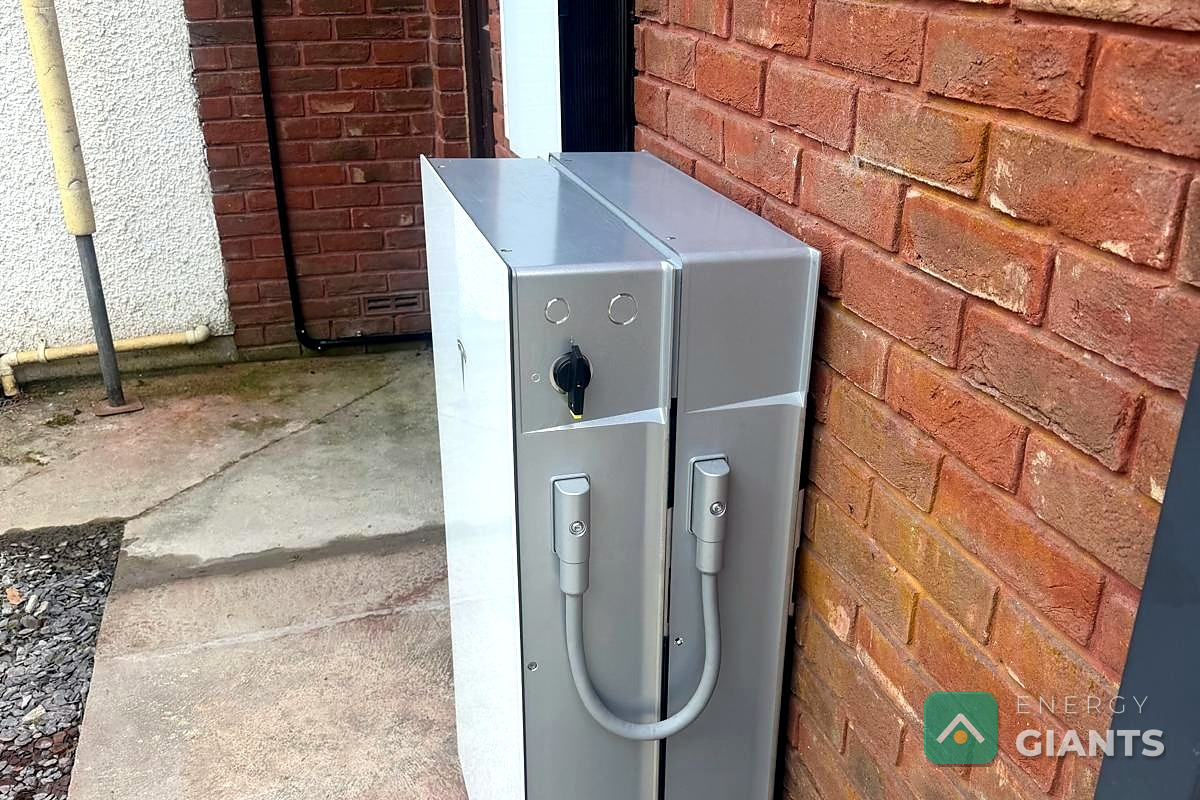
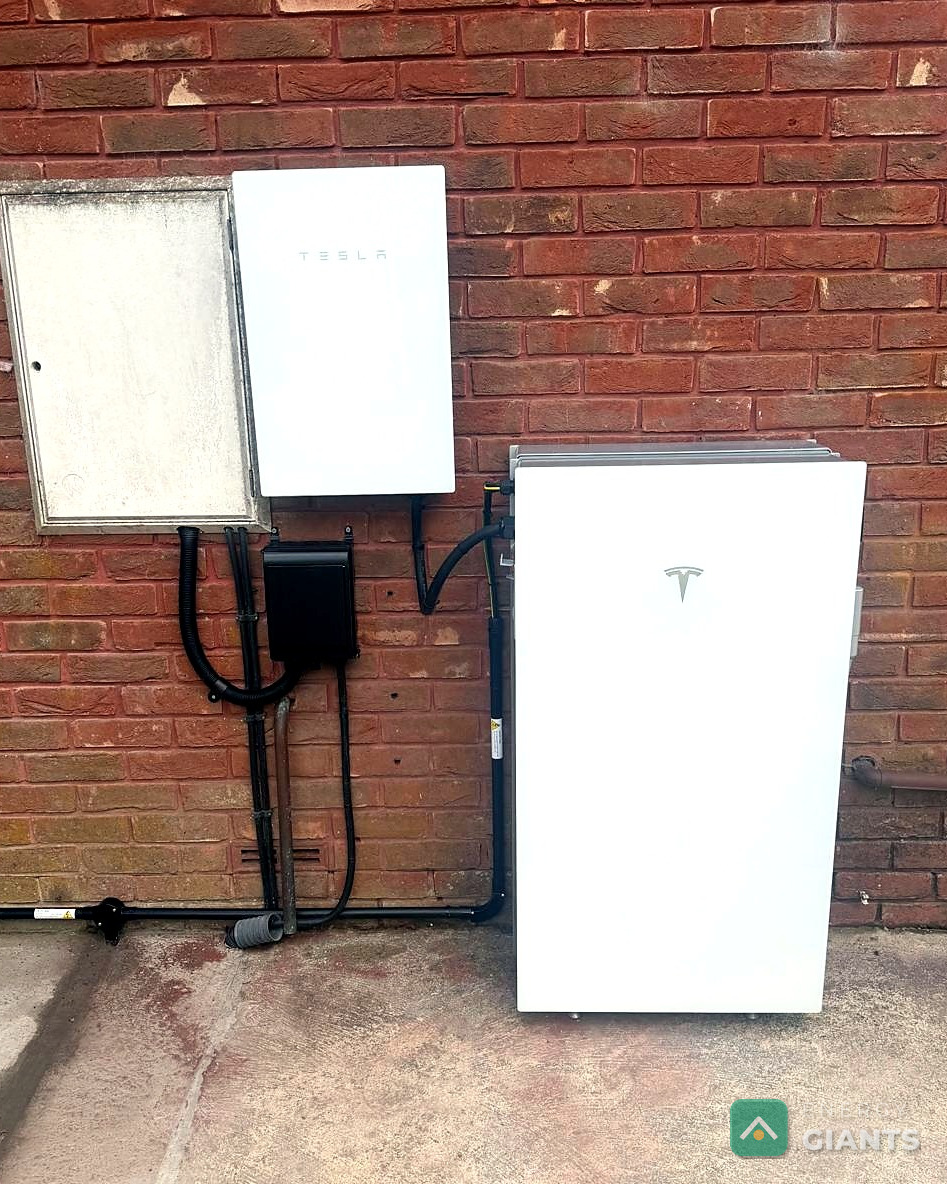
The batteries live outside. Powerwall 3 is rated for the weather, so both units are mounted on the brick wall of the house rather than taking up a room inside. A Tesla Powerwall 3 does two jobs in one box: it is the solar inverter, with three MPPT inputs taking the strings straight in, and it is 13.5 kWh of battery. Beside it a Powerwall 3 expansion unit adds another 13.5 kWh with no second inverter, which is why 27 kWh of storage takes up about a metre and a half of wall. The isolation and the new distribution equipment sit alongside in weatherproof enclosures.
Before any of that could be switched on, the connection had to be agreed. Because the inverter is over the G98 threshold, this was a G99 application to SP Manweb, who assessed the network, issued a connection offer within ten days of the application and gave consent for 10 kW with export limited to 4 kW. Consent came before connection, commissioning followed on 3 July, and the certificates for the solar and the battery were issued on 14 July.2

Why Tesla Powerwall 3
The inverter is built into the battery, so adding storage is simple.
On most systems the inverter and the battery are separate products from separate makers, each with its own app and its own warranty. Powerwall 3 puts the inverter inside the battery. The panels connect straight to it, the house is fed from it, and the expansion unit couples to it without another inverter in the chain. For a house that needed a big array and a lot of storage, that simplicity is the point.
It is also what makes the export cap easy to live with. The Powerwall controls how much leaves the house, so the G100 limit is set once and honoured automatically, while the surplus above it charges the batteries. The homeowner watches all of it in the Tesla app: solar, home, battery and grid, minute by minute.
Two honest notes. This installation is not configured to run the house in a power cut; that needs a Tesla Backup Gateway, which can be added. And the batteries are AC connected on the certificate, which simply means the Powerwall’s own inverter sits between the cells and the house, exactly as Tesla designs it.2
A day with this system
Where the power goes, morning to night.
Sun on the panels, the house first, the battery next, then the grid. Watch a day go by, or pick a time of day.
DaytimeThe panels run the house first. The surplus goes into the batteries before it reaches the meter, and only then to the grid, capped at 4 kW.
EveningThe batteries release the midday peak from late afternoon into the night.
OvernightEvenings and nights are served from the batteries. When they run low, the grid covers the rest.
- Solar Aiko panels on the east facing roof
- Battery Tesla Powerwall 3 and an expansion unit, with the solar inverter built in
- Grid export by day, import when needed
What was installed
The specification.
| Property | Detached house near Aberystwyth, Ceredigion, on a single phase rural supply |
|---|---|
| Panels | Eighteen Aiko A540 MDE60MW panels, 540 W each, 9.72 kWp. 15 year product warranty, 30 year performance warranty |
| Layout | One roof plane at 30 degrees facing 105 degrees from south, two columns of nine, no shading1 |
| Mounting | Renusol Variosole+ above roof system, medium roof hooks |
| Inverter and battery | Tesla Powerwall 3, 13.5 kWh with a 10 kW integrated solar inverter and three MPPT inputs, plus a Tesla Powerwall 3 expansion unit, 13.5 kWh. 27 kWh usable in total. Ten year warranty |
| Grid | SP Manweb. G99 application, connection offer and consent to connect before commissioning: 10 kW capacity with export limited to 4 kW under G100, single phase2 |
| Certification | Electrical installation certificate under BS 7671, issued 14 July 20262 |
| Investment | Between £17,000 and £21,000 installed for a system of this size and specification, VAT at 0%3 |
| Return | Estimated saving of about £1,560 in the first year at today’s prices, and payback in roughly 11 to 13 years across the price range above3 |
| Dates | Surveyed June 2026. Commissioned 3 July 2026. Certified 14 July 20262 |
- Step oneSurvey
The roof, the wall for the batteries, the supply and the household’s real usage, which is what pointed to 27 kWh rather than 13.5.
- Step twoDesign and consent
An performance estimate for an east roof with no flattery in it, and a G99 application to SP Manweb before anything was ordered.
- Step threeInstall
Scaffold to the ridge, eighteen panels, two Powerwalls on the outside wall, new distribution and isolation.
- Step fourCertify
Commissioned, export limit set, certificates issued, app handed over.
Month by month
What an east roof is expected to make.
Estimated generation in kWh for each month from the performance estimate. The summer months make far more than the house can use in daylight, which is exactly the electricity the two Powerwalls are there to hold. The winter months are thin, as they are on every roof in Wales.1
Big bill, awkward roof, or a supply that will not take the export?
Those are the houses where a Tesla Powerwall 3 earns its keep, and Energy Giants designs, installs and commissions them across Lancashire, the North West and Wales. We design around the roof you have and the connection you are allowed, and we tell you when a second battery is worth it and when it is not. Read about home battery storage and what solar costs, or book a survey. Our head office is in Clitheroe, with offices in Manchester and London, and as this job shows we travel.
Notes on the figures
- System size, layout, annual and monthly generation and self sufficiency are from the performance estimate in our quote for this property, prepared in OpenSolar: 708 kWh per kWp for the orientation and pitch, an assumed 8,000 kWh a year of household use, and 27 kWh of usable storage. They are estimates by the standard calculation method, not a guarantee of performance.
- Grid and certification details are from the project file: G99 application to SP Manweb in early June 2026 and a connection offer dated 15 June 2026 for 10 kW with G100 export limitation to 4 kW; commissioning date 3 July 2026 and installation certificates for solar PV and for battery storage dated 14 July 2026. The battery certificate records the installation as not operable in island mode.
- The investment figure is an indicative range for a system of this size and specification; we do not publish the price a customer paid. First year saving and payback are valued at today’s prices with no assumed price rises: 26.32p per kWh, the Ofgem price cap unit rate for 1 October to 31 December 2026 (GB average, Direct Debit), for electricity the home no longer buys, and 12p per kWh, the Outgoing Octopus Fixed rate from 1 March 2026, for exported electricity. That is 5,120 kWh a year of the home’s own use met by the system (64% of an assumed 8,000 kWh) and 1,762 kWh a year exported. Payback is the indicative price range divided by that first year saving, and ignores replacing equipment outside its warranty. Estimates, not a guarantee.
- The homeowner is not named on this page at our discretion. Photographs are of this installation.