


Case study · Solar and battery · Corby Glen, near Grantham
The old panels stayed.
We added the rest.
This house near Grantham already had a small 1 kW solar system from years ago. It still worked, so we left it where it was. We added ten new panels on the east facing roof, a hybrid inverter and a battery, and the two systems now work side by side. Installed at the end of May 2026.
 Ten Aiko panels with a Fox ESS hybrid inverter and battery, added alongside an existing system by Energy Giants.
The job in numbers
5.4kWp
Ten new Aiko panels
540 W each, all black, on the east facing roof at 35 degrees. The old 1 kW system is still working alongside.1
79%
Of the home’s power
Estimated share of the home’s electricity from the new panels and battery. Without the battery it would be 26%.1
10.36kWh
Usable storage
A Fox ESS battery in the garage, charged by the sun during the day and used in the evening.1
4days
On site
Scaffold, panels, a cable run to the garage, and commissioning, between 26 and 29 May 2026.2
The job
You don’t have to rip out old solar to go bigger.
Plenty of homes have a small solar system that went on ten or more years ago. People often assume that to get more, the old one has to come off. Not necessarily. If the old system still works, it can keep earning its keep.
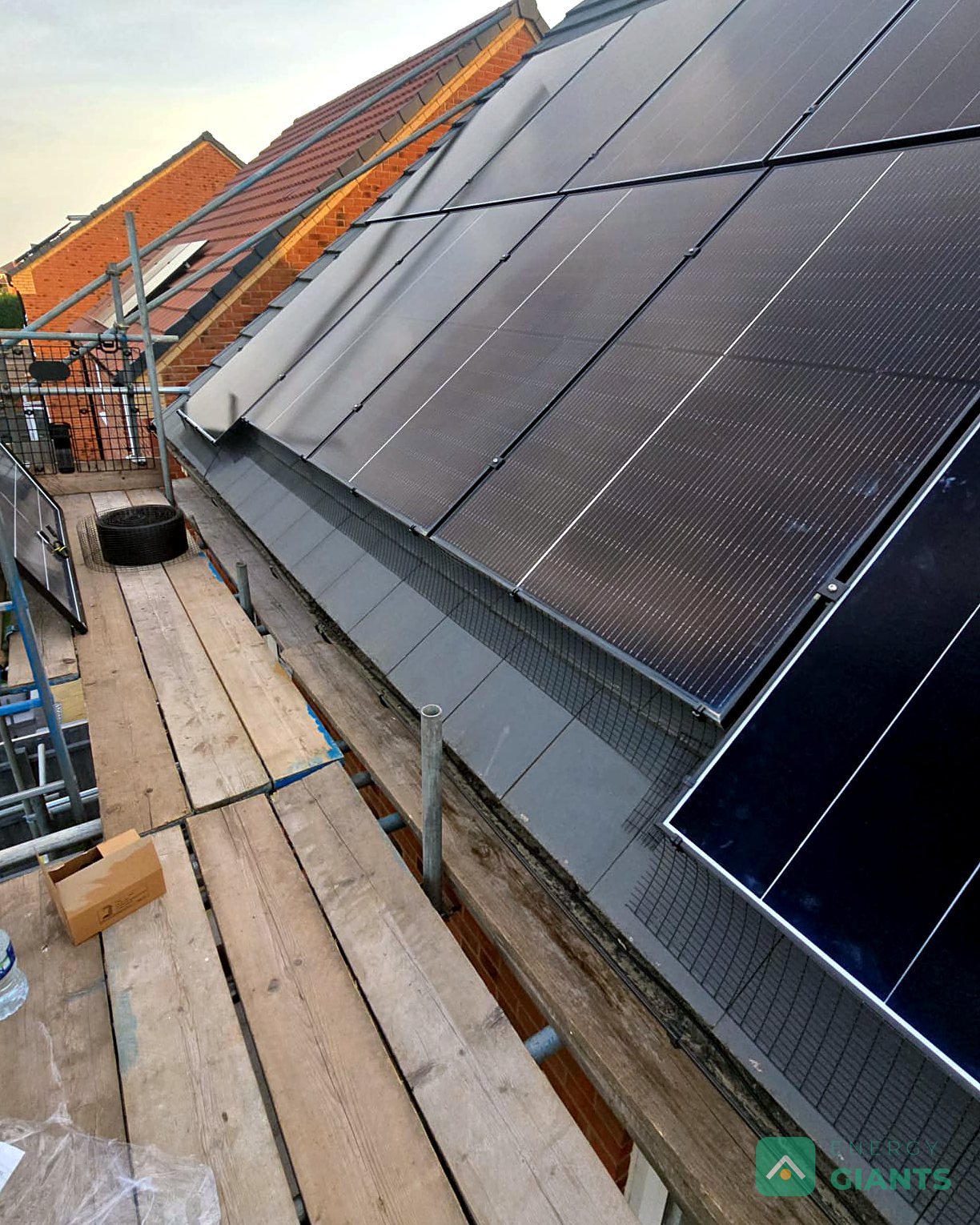
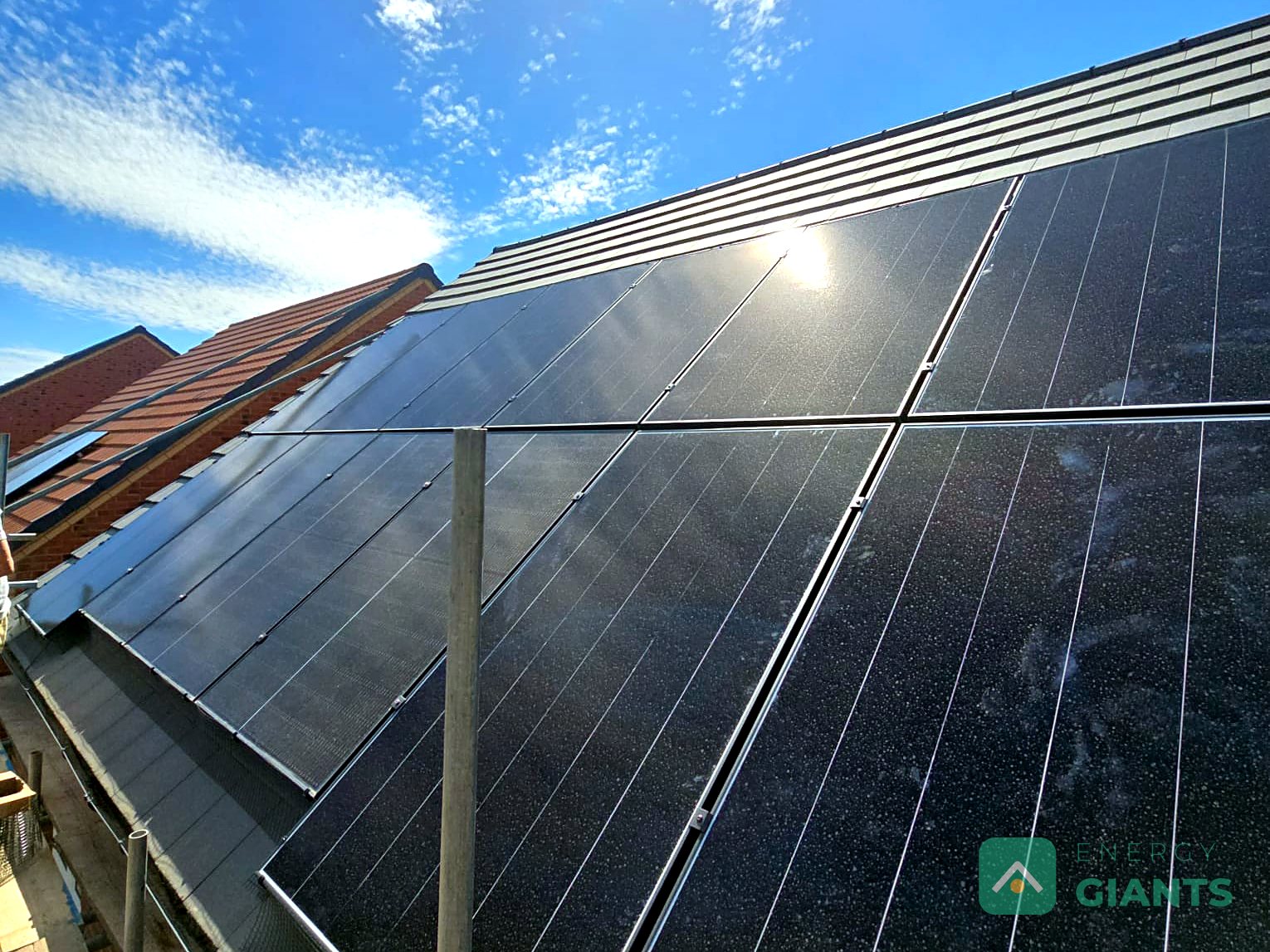
Here the original 1 kW system stayed exactly as it was. We added ten new panels on the east facing side of the roof, with their own hybrid inverter and a battery. The new inverter looks after the battery, and both systems feed the house.
An east facing roof is at its best in the morning. That’s where the battery helps most: it soaks up the morning and midday surplus and hands it back in the evening. The new system alone takes the house from about a quarter of its electricity to nearly four fifths.
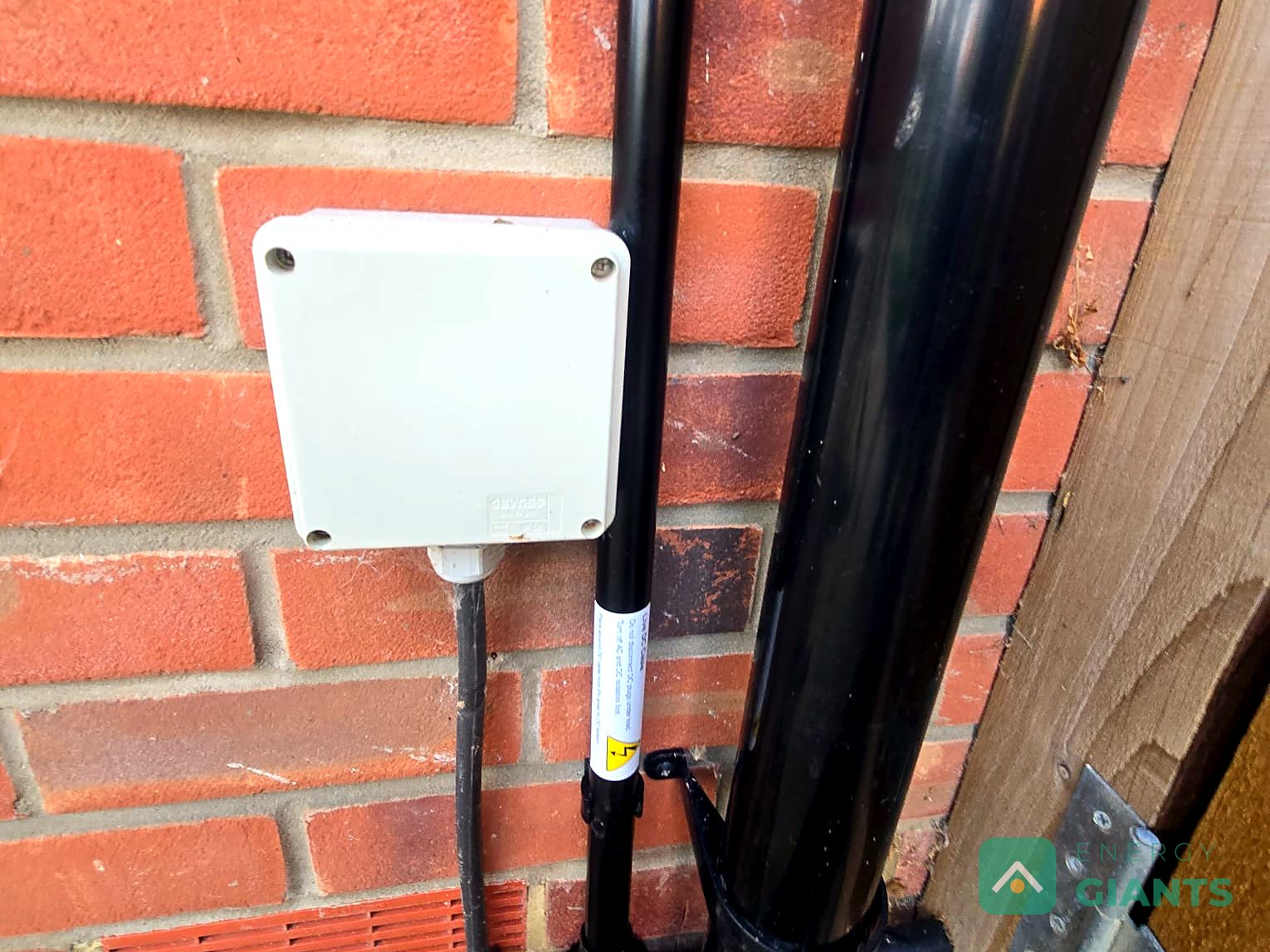
The inverter and battery went in the garage. That meant a cable run from the house, which we trenched and laid properly rather than clipping it along a fence.
How it works
What the new panels make, and where it goes.
How the new system works, in four pictures. The numbers are the estimates from the design for the new panels and battery, and don’t include the old 1 kW system.1
Where the power goes, over a year
Top bar: every kWh the new panels make in a year, split by where it ends up. Bottom bar: every kWh the house uses, split by where it comes from.
Where the solar goes 3,943 kWh a year
- 907 kWh used in the home as it is made 23%
- 1,853 kWh stored in the battery, used later 47%
- 1,183 kWh sent to the grid and paid for 30%
Where the home’s electricity comes from 3,500 kWh a year
- 907 kWh straight from the panels 26%
- 1,853 kWh from the battery 53%
- 740 kWh still bought from the grid 21%
Which way the panels face
The new panels face east, so they’re busiest in the morning. The battery carries that power into the evening.
- East roof, 9 panels 4.86 kWp, 35° pitch
- East roof, 1 panel 0.54 kWp, 35° pitch
- South east to south west, the sunniest arc
How it fits together
The new Fox ESS hybrid inverter runs the new panels and the battery. The old system has its own small inverter and carries on as before.
- Panels on the roof10 new Aiko panels, 5.4 kWp, plus the old 1 kW system
- InverterFox ESS H1, 3.68 kW hybrid, in the garage
- BatteryFox ESS battery, 10.36 kWh usable
- Your homeLights, kettle, EV, heat pump
- The gridExport agreed with the network operator
What it saves
About £870 a year from the new system, at today’s prices.
That’s solar from the new panels used in the home instead of bought, plus what’s paid for the rest. It doesn’t count the old system, which was already saving money. Worked out at today’s prices, with no guesses about prices going up.3
On the day
On the day.
What was installed
The specification.
| Property | Two storey brick house in Corby Glen, near Grantham, with a concrete tiled roof |
|---|---|
| Kept | The existing 1 kW solar system and its inverter, left in place and working |
| New panels | Ten Aiko 540 W all black panels, 5.4 kWp |
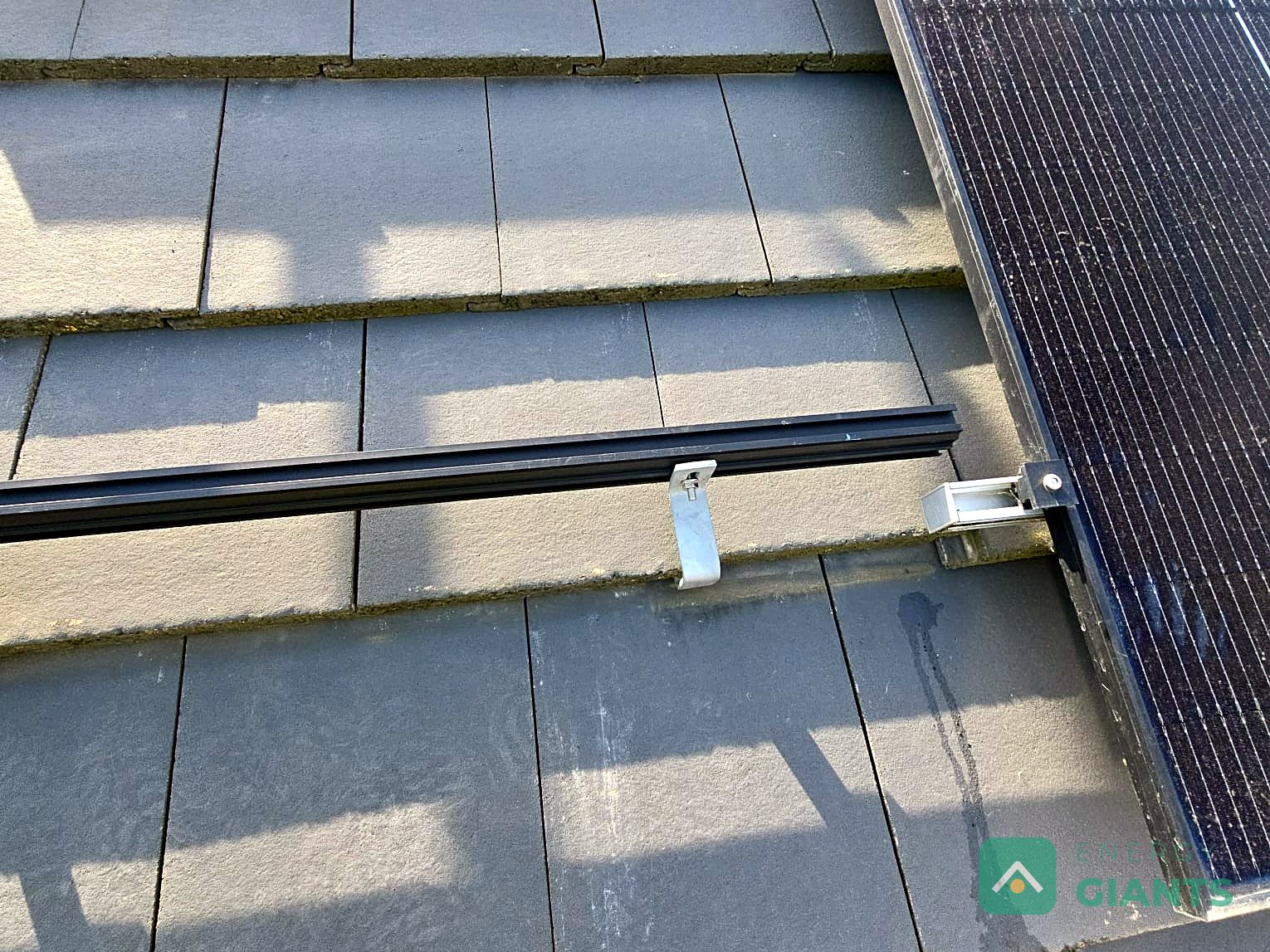
| Layout | Nine panels facing east and one facing slightly south of east, all at 35 degrees, fixed above the tiles1 |
| Inverter | Fox ESS H1, 3.68 kW hybrid, in the garage |
| Battery | Fox ESS EP12, 11.52 kWh, 10.36 kWh usable, in the garage |
| Grid | Fast track approval from National Grid Electricity Distribution before install2 |
| Dates | Surveyed 15 May 2026, installed 26 to 29 May, commissioned 29 May 20262 |
| Investment | Between £7,500 and £9,500 for the new panels, inverter and battery, VAT at 0%4 |
Questions people ask
Questions about adding to old solar.
Can I keep my old solar panels and add more?
Often, yes. If the old system still works and is safe, it can stay. We check it at survey, then design the new panels and battery to sit alongside it, with the network operator told about both.
Can I add a battery to old solar panels?
Yes. Here the battery sits on the new inverter, but a battery can also be added to an older system on its own. We explain the options at survey.
Is an east facing roof worth it?
It makes less per panel than a south facing roof, and most of it in the morning. With a battery to carry that into the evening, this one still covers nearly four fifths of the home’s electricity.
Keep reading
More like this.
Similar jobs
Got old panels and want more?
We’ll look at what you’ve got, tell you honestly whether to keep it, and design the rest around it.
Notes on the figures
- Generation, self consumption and the share of the home’s power are for the new panels and battery only, from the performance estimate in the quote: 3,943 kWh a year from 5.4 kWp facing east at 35 degrees, an assumed 3,500 kWh a year of household use, and 10.36 kWh of usable storage. They are estimates, not a guarantee.
- Dates and grid are from the project file: survey photographs 15 May 2026, fast track approval from National Grid Electricity Distribution on 18 May 2026, installation 26 to 29 May 2026 and commissioning 29 May 2026.
- Savings are worked out at today’s prices with no assumed price rises: solar used in the home is valued at 26.32p per kWh, the Ofgem price cap unit rate for 1 October to 31 December 2026 (GB average, Direct Debit), and exported electricity at 12.0p per kWh, the Outgoing Octopus Fixed rate from 1 March 2026. Your tariff, usage and export deal will change the figure. Standing charges are not affected by solar.
- The investment figure is an indicative range for a system of this size and specification; we do not publish the price a customer paid. Case study presented in line with section 5.3.3 of the Renewable Energy Consumer Code. The homeowner is not named, at our discretion.