


Case study · Solar and battery · Ashton-in-Makerfield, Wigan
A roof that faces two ways.
Panels on both sides.
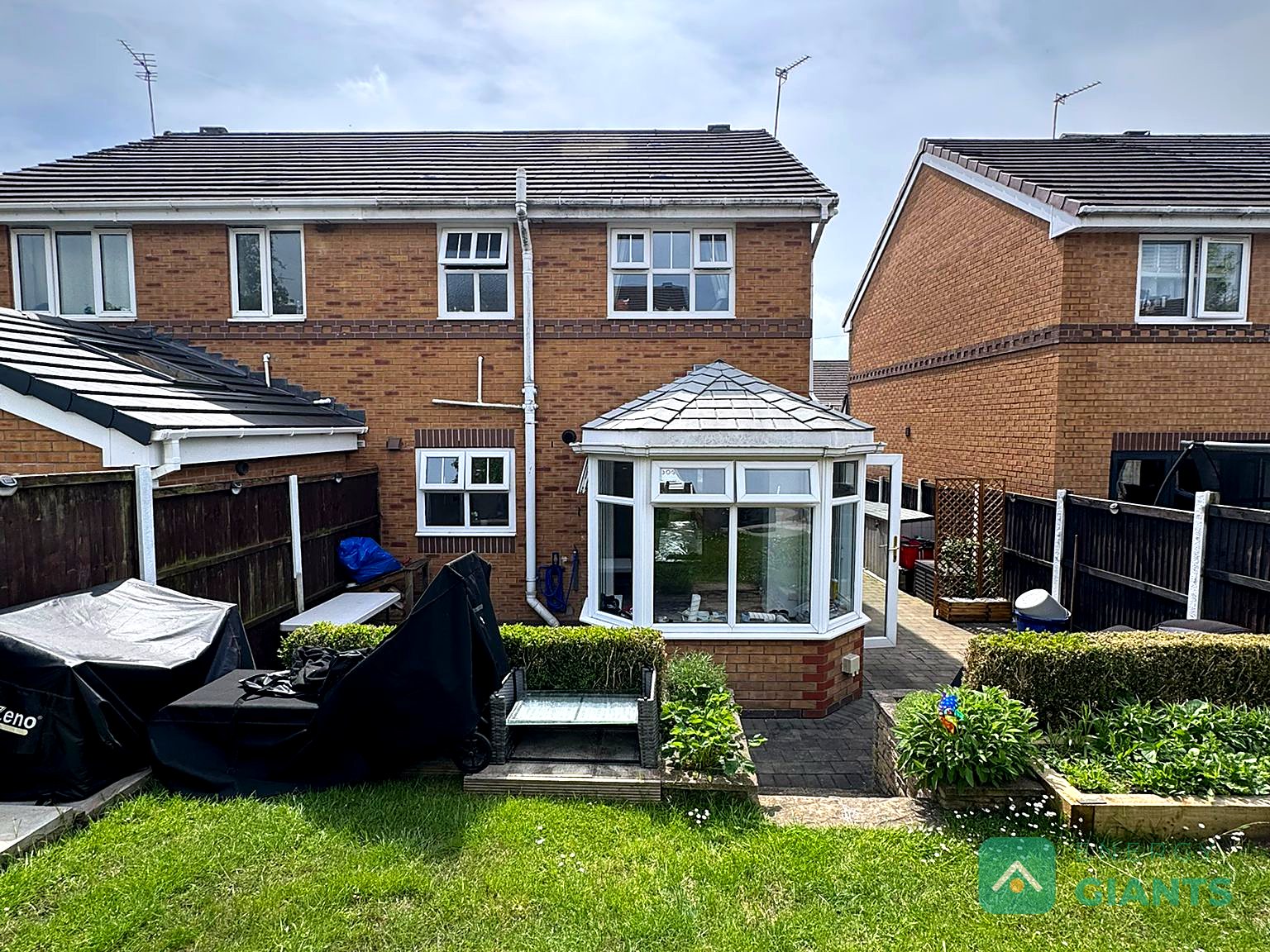
This semi in Ashton-in-Makerfield doesn’t have a big south facing roof. One side faces south west, the other north east. So we put panels on both, added a battery to catch the daytime surplus, and the house now gets around three quarters of its electricity from its own roof. Installed in June 2026.
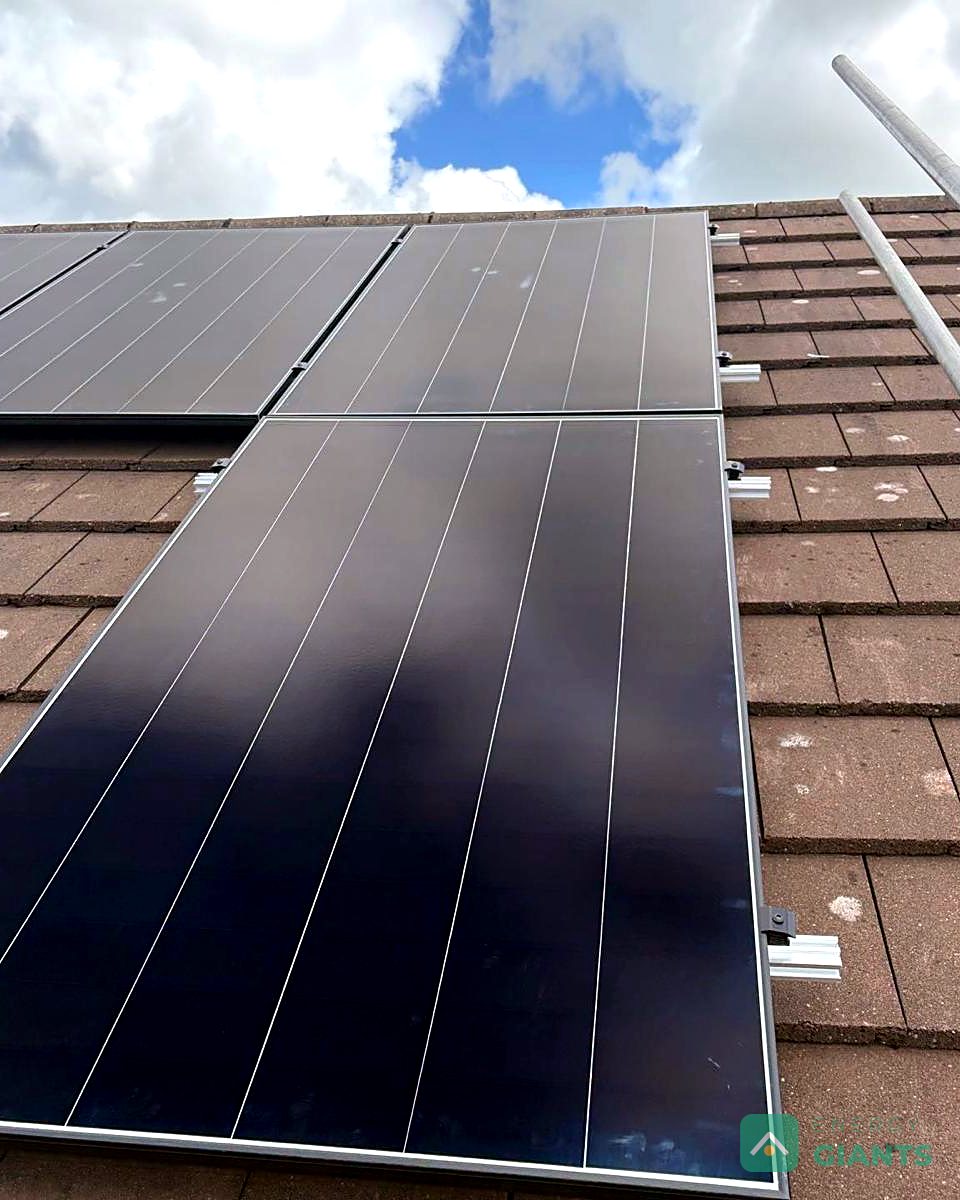
 Eleven Aiko panels with a Fox ESS hybrid inverter and battery, designed and installed by Energy Giants.
The job in numbers
5.94kWp
Eleven Aiko panels
Five on the south west side of the roof, six on the north east side. 540 W each, all black.1
4,097kWh
Made a year
Estimated generation across both roofs. The south west side works hardest, but the other side adds real power on summer mornings.1
77%
Of the home’s power
Estimated share of the electricity the house uses that now comes from the roof and battery. Without the battery it would be 28%.1
4days
On site
Scaffold up, panels on, battery and inverter fitted and commissioned between 6 and 9 June 2026.2
The job
Not every roof faces south. That’s fine.
A lot of people assume solar only works on a south facing roof. It works best there, but plenty of homes in the North West have roofs that face east and west, or like this one, south west and north east. The trick is to use both sides.
We put five panels on the south west side, which catches the afternoon and evening sun, and six on the north east side, which picks up the morning. That spreads the power across more of the day, which suits a household that isn’t out at work nine to five.
Then there’s the battery. On a sunny day the panels make more than the house can use. Without a battery most of that goes to the grid for a few pence. With one, it’s stored and used in the evening, when the kettle, the oven and the telly are all on. That single change takes the house from making about a quarter of its own electricity to about three quarters.
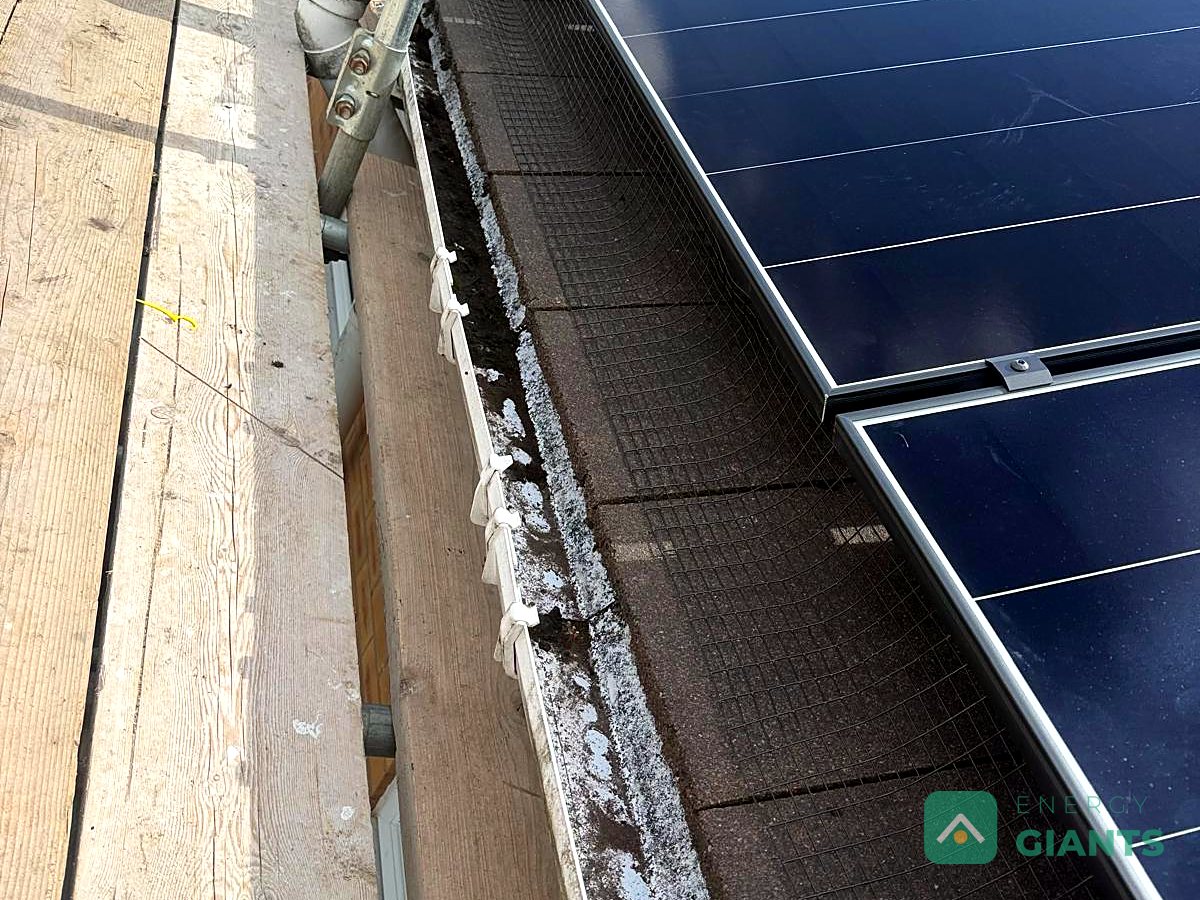
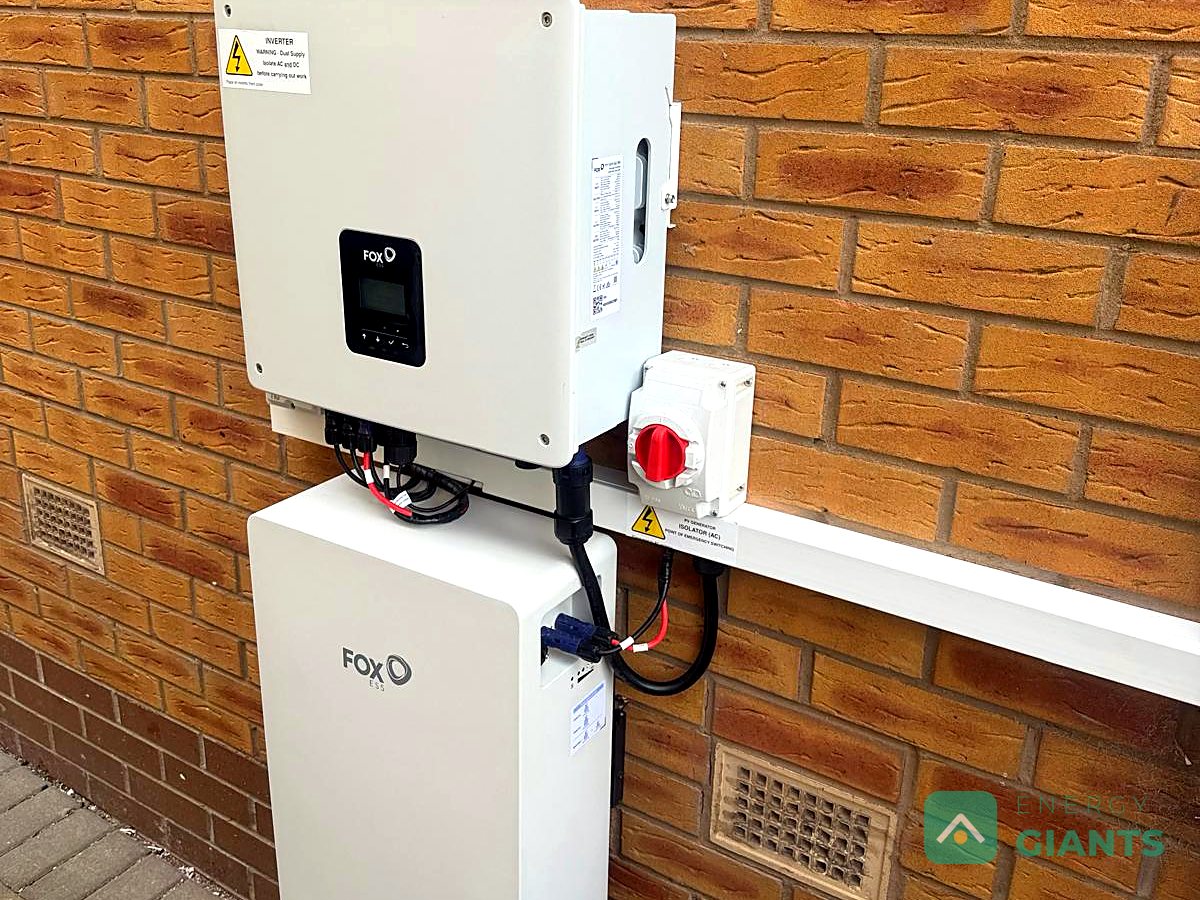
The inverter and battery sit on an outside wall next to the meter, so nothing takes up space indoors. We fitted bird mesh round the panels while the scaffold was up, so pigeons can’t nest underneath.
How it works
What the panels make, and where it goes.
Four quick pictures of how this system works. The numbers are the estimates from the design for this house.1
Where the power goes, over a year
Top bar: every kWh the panels make in a year, split by where it ends up. Bottom bar: every kWh the house uses, split by where it comes from.
Where the solar goes 4,097 kWh a year
- 860 kWh used in the home as it is made 21%
- 1,475 kWh stored in the battery, used later 36%
- 1,762 kWh sent to the grid and paid for 43%
Where the home’s electricity comes from 3,031 kWh a year
- 860 kWh straight from the panels 28%
- 1,475 kWh from the battery 49%
- 696 kWh still bought from the grid 23%
Which way the panels face
The two roof slopes point in almost opposite directions. The south west side makes about a third more per panel, but between them they cover the whole day.
- South west roof 2.7 kWp, 31° pitch
- North east roof 3.24 kWp, 31° pitch
- South east to south west, the sunniest arc
How it fits together
Everything runs through one Fox ESS hybrid inverter, which also manages the battery.
- Panels on the roof11 Aiko panels, 5.94 kWp on two slopes
- InverterFox ESS H1, 5 kW hybrid
- BatteryFox ESS EP6, 5.76 kWh
- Your homeLights, kettle, EV, heat pump
- The gridPaid for what the house doesn’t use
What it saves
About £830 a year, at today’s prices.
That’s the solar the house uses instead of buying, plus what it’s paid for the rest. We’ve worked it out at current prices with no guesswork about prices going up.3
On the day
From the scaffold.
What was installed
The specification.
| Property | Semi detached brick house in Ashton-in-Makerfield, Wigan, with a concrete tiled roof |
|---|---|
| Panels | Eleven Aiko 540 W all black panels, 5.94 kWp in total |
| Layout | Five panels on the south west slope and six on the north east slope, both at 31 degrees, fixed above the tiles1 |
| Inverter | Fox ESS H1, 5 kW hybrid inverter |
| Battery | Fox ESS EP6, 5.76 kWh |
| Extras | Bird mesh round the array |
| Grid | Approved by Electricity North West before install, export up to about 5 kW2 |
| Dates | Installed 6 to 9 June 2026, commissioned 9 June 20262 |
| Investment | Between £7,000 and £9,000 for a system of this size and specification, VAT at 0%4 |
Questions people ask
Questions about split roofs.
Is solar worth it if my roof doesn’t face south?
Usually, yes. A roof that faces away from south makes less per panel, but it spreads the power over more of the day. On this house each panel on the north east side is expected to make about three quarters of what a panel on the south west side makes, and together they still cover 77% of the home’s electricity.
Why add a battery?
Because most of what the panels make happens in the middle of the day, when most homes aren’t using much. A battery stores it for the evening. Here it lifts the share of the home’s power coming from the roof from 28% to 77%.
Can you fit panels on both sides of my roof?
Often. We check the structure, the shading and whether both slopes are worth covering during the survey, and tell you straight if one side isn’t worth it.
Keep reading
More like this.
Roof not facing south? Let’s look at it anyway.
Most roofs can take solar. We’ll survey yours, tell you honestly what it will make, and whether a battery is worth it for the way you live.
Notes on the figures
- Generation, self consumption and the share of the home’s power are from the performance estimate in the quote for this house: 4,097 kWh a year across both slopes and an assumed 3,031 kWh a year of household use. They are estimates, not a guarantee. Actual output depends on the weather and on how the house uses electricity.
- Grid and dates are from the project file: fast track approval from Electricity North West on 29 May 2026, install 6 to 9 June 2026, commissioning 9 June 2026.
- Savings are worked out at today’s prices with no assumed price rises: solar used in the home is valued at 26.32p per kWh, the Ofgem price cap unit rate for 1 October to 31 December 2026 (GB average, Direct Debit), and exported electricity at 12.0p per kWh, the Outgoing Octopus Fixed rate from 1 March 2026. Your tariff, usage and export deal will change the figure. Standing charges are not affected by solar.
- The investment figure is an indicative range for a system of this size and specification; we do not publish the price a customer paid. Case study presented in line with section 5.3.3 of the Renewable Energy Consumer Code. The homeowner is not named, at our discretion.