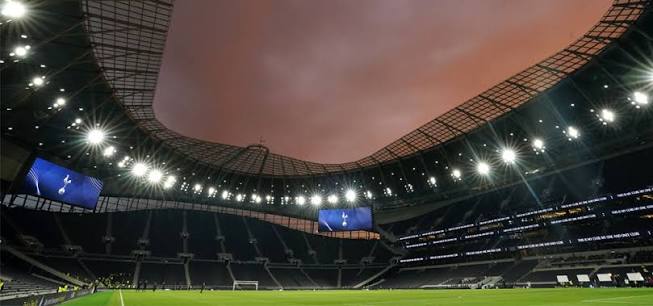

There is a Premier League table that does not move on a Saturday. It moves when a club signs a renewable electricity contract, puts panels on a stand roof, or quietly stops publishing its numbers. Football365, working with the fan group Pledgeball, ranked all twenty 2026-27 grounds on it in August. Last month we did the same for the EFL Green Clubs scheme; this is the top flight. We have taken their order, added the one column we care about most, whether there is solar on the stadium itself, and looked at what the top of the table is doing that the bottom is not.
The short version: the clubs at the top buy clean electricity, cut waste to almost nothing and get fans out of cars. Only two of the twenty have panels on the ground they play in. Four more have them planned. For a set of buildings with some of the largest unshaded roofs in their cities, that is the surprising number.
The table
The order is Football365 and Pledgeball’s, published on 24 August 2026 and based on what each club discloses about energy, waste, water, travel and reporting. The solar column and the notes are ours, drawn from club statements and press coverage. The ground sits under each club name.
| # | Club | Solar | What stands out |
|---|---|---|---|
| 1 | Tottenham Hotspur Tottenham Hotspur Stadium | Planned | 1.6 MW, about 3,800 panel array planned for the roof; certified renewable power |
| 2 | Everton Hill Dickinson Stadium | Yes | Solar and rainwater harvesting built in; 99% of build waste diverted |
| 3 | Arsenal Emirates Stadium | No | 100% renewable electricity since 2017; battery storage; validated targets |
| 4 | Manchester City Etihad Stadium | Planned | 2,800 panels at the Joie Stadium; net zero 2030; matchday bus network |
| 5 | Liverpool Anfield | No | 96% renewable or low carbon energy; ISO 20121; bottle recycling 20% to 90% |
| 6 | Brighton & Hove Albion Amex Stadium | No | Public transport in the ticket price; 75% of fans travel low carbon |
| 7 | Chelsea Stamford Bridge | No | Renewable procurement; live energy monitoring saving 350 homes worth |
| 8 | Brentford Gtech Community Stadium | No | Renewable electricity; two season shirt cycle; 2020 build |
| 9 | AFC Bournemouth Vitality Stadium | No | Renewable electricity; motion sensing lighting; food waste to energy |
| 10 | Manchester United Old Trafford | No | Certified environmental management; most waste diverted from landfill |
| 11 | Aston Villa Villa Park | No | REGO backed renewable contracts; LED lighting; water saving |
| 12 | Newcastle United St James' Park | No | Boiler optimisation with measured savings; city centre transit |
| 13 | Fulham Craven Cottage | No | Renewable procurement; building management system; EV chargers |
| 14 | Sunderland Stadium of Light | Planned | 40 MW solar farm and car park canopy proposed; net zero 2040 |
| 15 | Crystal Palace Selhurst Park | No | Three walkable stations; leak detection; cellar tech saving 8,250 litres |
| 16 | Nottingham Forest The City Ground | Yes | Solar powered fan zone generating 12,000 kWh a year; LED floodlights |
| 17 | Coventry City Coventry Building Society Arena | Planned | 95% recycling rate; E.ON decarbonisation partnership; solar pending |
| 18 | Leeds United Elland Road | No | Basic recycling and efficiency; little data published |
| 19 | Ipswich Town Portman Road | No | Town centre ground; promises with limited public evidence |
| 20 | Hull City MKM Stadium | No | Segregated waste, smart urinals, EV charging; no clean energy programme |

How the ranking was made, and what it is not
Football365’s writer Ryan Baldi assessed each stadium with Pledgeball on the things a ground can actually control: where its electricity comes from, what happens to its waste and water, how fans get there, and whether the club publishes enough for any of it to be checked. It is a journalistic ranking, not a certification. The Premier League’s own Environmental Sustainability Commitment, introduced in 2024-25, sets a minimum standard of action for every club but does not rank them. Sport Positive, which used to publish a points table, now publishes a report instead; its last table put Liverpool and Tottenham joint top on 24 points out of 27.
So treat the order as informed opinion built on public disclosure. A club that does a great deal and says little will sit lower than it deserves, which is a lesson in itself.
Who is winning
Tottenham Hotspur top the table on the strength of certified renewable electricity, zero waste to landfill, reusable cups and cartons instead of plastic bottles, and a 1.6 MW solar array of around 3,800 panels planned for the stadium roof, first reported in July and pencilled in to start this September. They were also the first Premier League club to join the UN backed Sports for Nature framework, with hundreds of trees, a wildflower meadow, two ponds and more than 540 bat boxes around the ground.
Everton take second with the newest ground in the division. Hill Dickinson Stadium was built with solar panels and rainwater harvesting designed in, and 99 per cent of construction waste was diverted from landfill. That is the advantage of a blank sheet of paper: the sustainability is in the structure rather than bolted on.
Arsenal have run the Emirates on 100 per cent renewable electricity since 2017, added battery storage, send food waste to anaerobic digestion and have externally validated emissions targets. Manchester City round out the top four with detailed reporting, renewable electricity, zero landfill waste, a matchday bus network carrying around 1,580 supporters a game, and more than 2,800 panels already on the Joie Stadium next door, with thousands more planned across the academy and a net zero target of 2030.
We design and install commercial solar and battery systems, from stand roofs to warehouses, and we will tell you honestly whether the roof and the daytime demand justify it.
The solar column, which is the interesting one
Strip the table back to one question, is there solar on the stadium, and it looks very different. Everton and Nottingham Forest are the only two clubs with panels generating on the ground itself, and Forest’s is a solar powered fan zone producing around 12,000 kWh a year, useful but small. Tottenham, Manchester City, Sunderland and Coventry City have projects announced or proposed, from Spurs’ 1.6 MW roof array to Sunderland’s 40 MW solar farm and car park canopy. Everyone else buys green electricity from the grid, which is good, but it is not the same as making it.
Why does that matter? Because a football stadium is one of the best solar propositions in any town. The stand roofs are large, high, unshaded and usually pitched towards the sky. The building is used hard on non match days for offices, hospitality, conferencing, retail and training, which means daytime demand to soak up the generation. And with a battery, the afternoon’s sunshine can carry into a 7.45 kick off under floodlights.
What a stand roof is worth
Published figures put numbers on it. Cheltenham Town fitted 213 panels in 2023 for about £90,000, generating around 77 MWh a year and saving roughly £21,000 annually, a payback of about four years. Industry estimates for a 100 kWp array on a large roof put output at around 90,000 kWh a year and savings between £27,000 and £32,000, with most stadium systems paying back in three and a half to six years against a life of 25 years or more. Further up the pyramid, Preston North End’s Deepdale installation, the largest in the English Football League, was funded entirely by a third party and is reported to save the club £84,000 in its first year. We wrote that one up in our EFL Green Clubs league table.
Against a Premier League club’s turnover those are small sums. Against a stadium’s electricity bill they are not, and every one of them compounds for twenty five years. The clubs at the top of this table have understood that the cheapest kilowatt hour is the one you do not buy.
The bottom three
Leeds United, Ipswich Town and Hull City sit in the relegation places. In each case the problem is as much disclosure as delivery: basic recycling and efficiency measures, promises with limited public evidence, and, at Hull, no clean energy programme or biodiversity plan published at all. Elland Road’s distance from the railway station also drives car travel. None of these are hard to fix, and a published policy with a few numbers behind it would move any of them several places by next season.
The North West angle
Four of the top ten grounds are in the North West: Everton second, Manchester City fourth, Liverpool fifth with 96 per cent renewable or low carbon energy and bottle recycling up from 20 to 90 per cent, and Manchester United tenth with a certified environmental management system and most of Old Trafford’s waste diverted from landfill. Lancashire has no club in this division this season, and we would like that to change on the pitch as much as anyone. We are an Associate Partner of Blackburn Rovers FC for 2026-27, and the club’s published energy and environmental policies, and the assessed solar potential of the Ewood Park stand roofs, are exactly the groundwork this table rewards.
If you run a ground, a venue or a large roof
You do not need a Premier League budget to sit near the top of a table like this. You need a survey of the roof, a look at the daytime demand, an honest view on whether a battery earns its place, and the paperwork to make it fundable. That is what we do, for grounds, warehouses, schools and housing schemes across the North West, alongside our domestic work. The Deepdale model, where a third party funds the panels and the club buys the electricity, is available to any ground with a sound roof and a decent daytime load.
Which Premier League club is the most sustainable in 2026-27?
On the Football365 and Pledgeball ranking, Tottenham Hotspur, with Everton second and Arsenal third. Sport Positive’s last points table had Liverpool and Tottenham joint top on 24 out of 27. The two rankings weigh things differently, but Spurs are at or near the top on both.
Which Premier League stadiums have solar panels?
Everton’s Hill Dickinson Stadium and Nottingham Forest’s City Ground have panels generating on the stadium. Tottenham Hotspur Stadium has a 1.6 MW array of around 3,800 panels planned for its roof, Manchester City has 2,800 on the neighbouring Joie Stadium with more planned, and Sunderland and Coventry have projects proposed.
Which clubs are bottom of the sustainability table?
Leeds United, Ipswich Town and Hull City, largely because they publish little evidence of what they do. Hull has no clean energy or biodiversity programme disclosed.
How much can a stadium save with solar?
Cheltenham Town’s 213 panel array saves about £21,000 a year on a £90,000 outlay. A 100 kWp array on a large roof typically generates around 90,000 kWh and saves £27,000 to £32,000 a year. Deepdale’s much larger installation is reported to save Preston North End £84,000 in year one.
Does Energy Giants install solar on stadiums?
Yes. We design and install commercial solar and battery systems on stand roofs, warehouses, public buildings and housing schemes, alongside domestic work across Lancashire and the North West. See our commercial solar page.
A free survey of the roof and the demand, an itemised design with the MCS estimate behind it, and the funding routes explained, including the model that paid for Deepdale.
Miles has spent two decades in retrofit and has worked at scale across the UK, with long-standing relationships with local authorities including Kirklees Council, Durham County Council and Ribble Valley Borough Council. He has project-directed programmes for housing associations and delivery partners including Aspire Housing, Sureserve, LivGreen and BroadOak, and for energy suppliers including E.ON Next, Utilita, British Gas, Octopus and UKEM.